
Key Takeaways
- John Doe 33 filed on June 30, challenging Noah Doe’s $293B bitcoin lawsuit.
- 500 BTC moved July 2 from wallet No. 881, weakening the abandonment theory.
- Justice Kathy J. King’s July 14 hearing could reshape the Noah Doe litigation.
Inside the $293 Billion Bitcoin Claim
The lawsuit, filed March 11, 2026, in the New York Supreme Court, seeks a declaratory judgment awarding ownership of approximately 39,069 dormant bitcoin addresses collectively holding an estimated 3.8 million BTC.
The plaintiffs, identified only as Noah Doe along with Wyoming entities ABC Company and XYZ Company, argue they became entitled to the wallets after allegedly identifying dormant addresses with proprietary software, delivering lists of those addresses to the NYPD as found property, and invoking New York’s Personal Property Law Article 7-B governing lost property.
The wallet list includes addresses publicly associated with the 2011 Mt Gox hack, the Counterparty burn address, and more than 21,000 addresses researchers have linked to the Patoshi mining pattern widely attributed to Bitcoin creator Satoshi Nakamoto. Even if the plaintiffs ultimately prevailed, a favorable judgment would not allow them to spend any bitcoin because only the corresponding private keys authorize transactions on the Bitcoin network.
Court Hit the Brakes Before Default Judgment
The case appeared headed toward a possible default judgment until June 5, when Justice Kathy J. King stayed further proceedings after New York attorney Ian R. Cohen submitted a proposed amicus curiae brief challenging the plaintiffs’ legal theory.
Cohen argued that New York’s lost-and-found statute governs tangible property, not blockchain addresses, and maintained that prolonged inactivity does not constitute legal abandonment. He also questioned whether the plaintiffs properly served thousands of wallet owners through OP_RETURN messages embedded in bitcoin transactions and raised broader jurisdictional concerns.
The stay remains in place while the court considers multiple pending motions. On June 18, plaintiffs’ counsel asked the court to vacate or narrow the stay, arguing the litigation should continue despite the amicus filing.
First Wallet Holder Enters the Fight
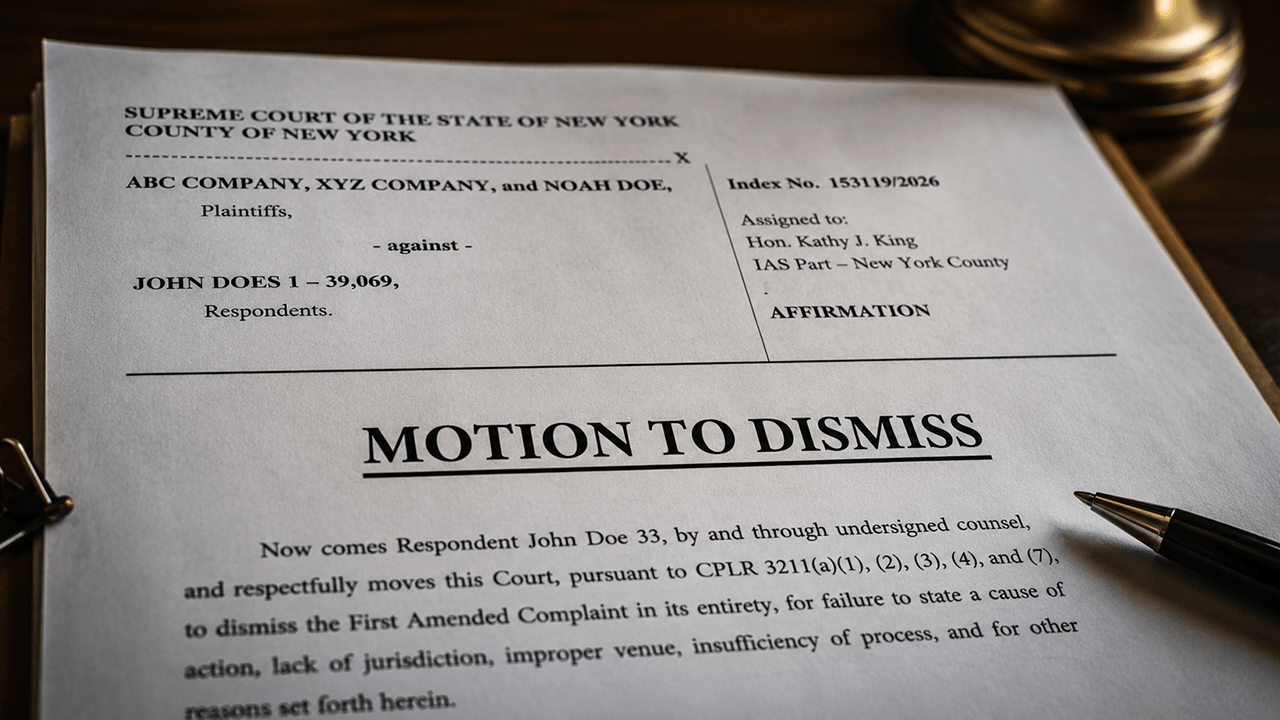
The litigation took another significant turn on June 30 when a pseudonymous respondent identifying himself as “John Doe 33” filed both a notice of appearance and a motion to dismiss, becoming the first actual wallet holder to contest the lawsuit.
In the filing, John Doe 33 states he is “a natural person and a real human being,” not a bitcoin address, digital wallet or line of source code. He further explains that the pseudonym is intended to protect his identity because of the well-known security risks associated with publicly identified cryptocurrency holders, while reserving all legal defenses against the action.
His appearance materially changes the posture of the case. Until now, the plaintiffs largely faced no direct opposition from named wallet owners, leaving open the possibility that much of the litigation could proceed without actual respondents participating.
Another 500 BTC Move Weakens the Abandonment Theory
Just two days after the filing, another defendant’s wallet became active onchain.
On July 2, 2026, 500 BTC moved from address 1HnVSXAMkCUHD8EeRxnNXXB6B12oQ9URpV, identified as wallet No. 881 in the Noah Doe lawsuit. Blockchain records show the transaction transferred the entire balance essentially after paying approximately 57,000 satoshis in network fees.

The transfer joins a growing list of wallets named in the complaint that have moved funds since the litigation began attracting public attention. Previous activity included approximately 35.55 BTC from a 2011-era wallet on June 2, 47.26 BTC on June 6, roughly 1,878 BTC from a 2019 wallet on June 7, and approximately 199.216 BTC from a 2012-era address on June 19.
Each additional transaction presents another challenge to the plaintiffs’ central contention that the wallets were abandoned by their owners. The growing number of active addresses has become one of the most closely watched aspects of the litigation among legal observers and onchain analysts.
What Happens Next?
The next major milestone comes on July 14, 2026, when oral arguments are scheduled for 10:30 a.m. before Justice Kathy J. King at New York County Supreme Court.
The hearing is expected to address Cohen’s amicus application, the plaintiffs’ request to modify or lift the stay, and the newly filed motion to dismiss by John Doe 33, among other procedural issues.
The outcome could determine whether the case resumes, remains paused, or is narrowed before reaching the merits. Regardless of the court’s decision, the combination of an active defendant entering the litigation and continued movement from wallets named in the complaint has added new obstacles to one of the most unusual legal challenges ever brought against dormant bitcoin holdings.
