
A seed phrase is a string of 12-24 words that serves as a master key for a non-custodial or self-custody cryptocurrency wallet. It enables you to retrieve your wallet and regain access to your digital assets that live on blockchain networks.
In this article, we’ll dig deeper into the concept of seed phrases, how they work, and their significance. We’ll also provide a step-by-step guide on how to restore your wallet and store your seed phrases securely.
What is a Seed Phrase?
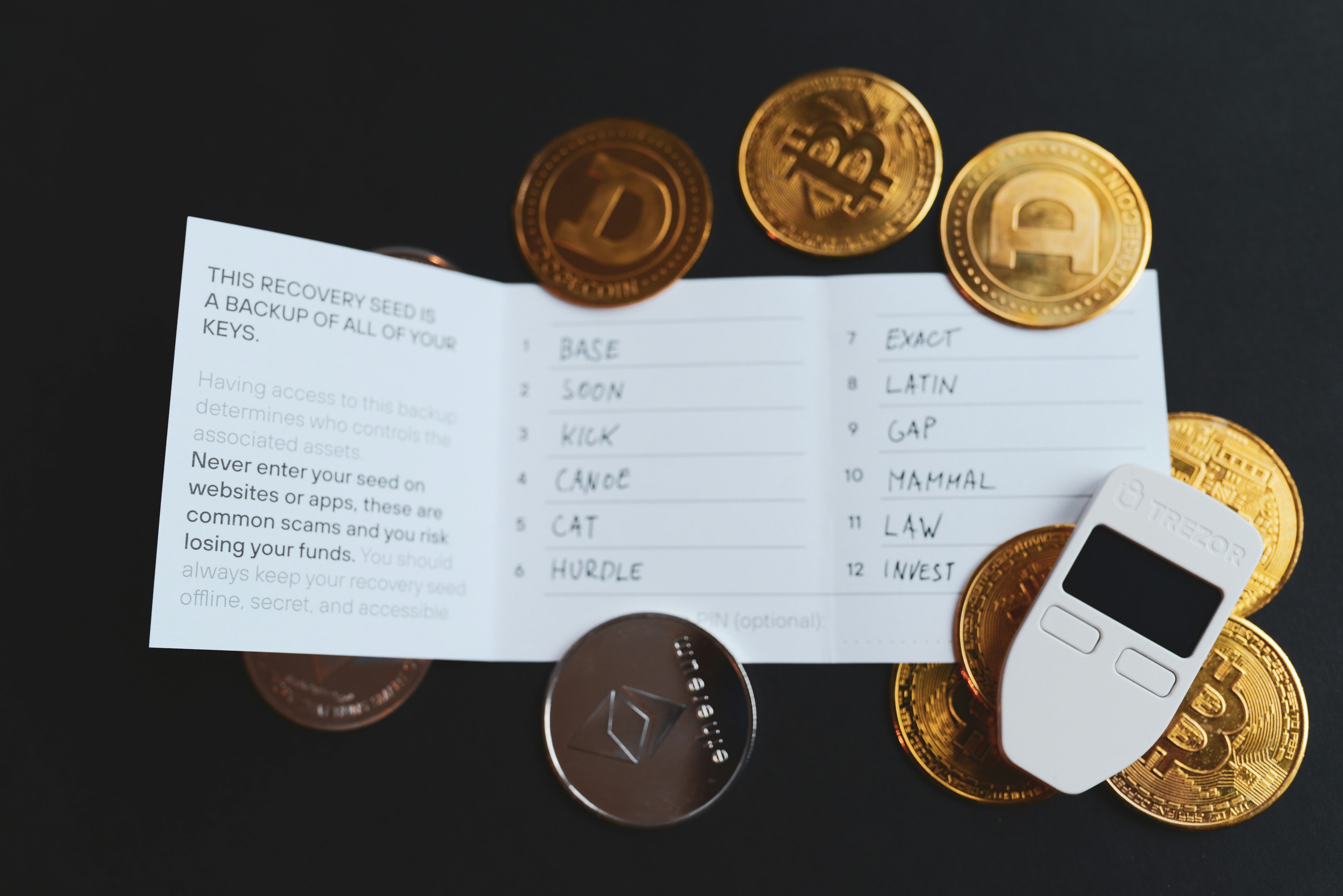
A seed phrase is a unique sequence of 12, 15, 18, 21, or 24 random words. It is generated from a pre-defined list of English words. It is also known as a recovery phrase, mnemonic phrase, secret phrase, or backup phrase. The longer your seed phrase, the stronger the security of your private keys and crypto assets.
While many wallets use the Bitcoin Improvement Proposal-39 word list, some, like Electrum, use a non-BIP-39 mnemonic system.
If you lose access to your assets or forget your private keys, a recovery phrase helps restore your cryptocurrency wallet. Hierarchical deterministic wallets like Metamask and Trust Wallet can recover all the private keys from a single phrase.
How Do Seed Phrases Work?
- Entropy creation: When you set up a new wallet, it generates a random number, known as entropy. It is a long numeric string with at least 128 bits of information. A higher entropy results in a longer seed that is harder to decode, providing a greater level of security.
- Checksum generation: The wallet generates a checksum by hashing the entropy. The first few bytes of the hash become the checksum. It prevents fund transfers to the wrong wallet addresses and the import of incorrect private keys. It also detects errors in transaction data that may have been introduced during storage/transmission. Even if the word order changes, the checksum fails, rendering your phrase invalid.
- Appending checksum to the entropy: The checksum is added to the end of the random number to preserve the integrity of the recovery phrase.
- Data splitting: Based on the length of the secret phrase, the combined data is divided into the required number of chunks/sections.
- Section mapping: Every chunk/section is mapped to a specific word in the BIP-39 word list and is assigned a number (position index). For instance, if a section’s index is 175, it corresponds to the 176th word in the list.
- Seed phrase generation: The resulting words are sequenced in the same order as the original sections. The ordered list of words becomes your seed phrase. The last word is the checksum.
Why Are Seed Phrases Important in Crypto Wallets?
- Wallet recovery: Imagine your cold wallet got damaged, your hot wallet got deleted, or you lost your private keys. Under such circumstances, the seed phrase helps you retrieve access to your cryptocurrencies on the blockchain. It recovers your entire wallet by regenerating your private keys.
- Private key backup: Seed phrases act as a fail-safe mechanism for your cryptocurrencies by backing up your confidential cryptographic keys. They include a checksum to ensure you’ve recorded/entered the secret phrase accurately.
- Enhanced security: By minimizing the risk of permanently losing access to your wallets, seed phrases provide an additional security layer to your digital wealth.
- Promotes decentralization: Recovery phrases grant you complete control over your private keys and cryptocurrencies, eliminating third-party custodians.
Seed Phrase vs Private Key: What’s the Difference?
| Seed phrase | Private key |
| It is a unique string of 12-24 English words that helps you recover your crypto wallet. | It is a distinct alphanumeric code that enables you to access your crypto assets that reside on blockchains. |
| You need seed phrases to restore access to your cryptocurrencies and recreate private keys when a wallet is lost/reset. | You need private keys to authorize transactions and prove ownership of digital assets. |
| It acts as a master key and is derived from a pre-determined word list. | It is akin to an ATM PIN and is derived from your seed phrase. |
| If you lose your seed phrase, you permanently lose the ability to retrieve your wallet. | If you lose your private key, you lose access to the assets controlled by the key. You can regain access only if the seed phrase is intact. |
How to Secure Your Seed Phrase?
Write It Down
Note down your mnemonic phrase on a piece of paper correctly. For enhanced protection against natural disasters, stamp/engrave it on fire, water, and corrosion-resistant metal plates. You can consider metal seed phrase storage solutions such as Ledger’s Cryptosteel Capsule Solo, The Bilfodl, and Cryptotag Zeus.
Choose Safe Storage Locations
Preserve your written secret phrase or the metal plate on which it is engraved in a secure location. You can store it in a bank’s safety deposit box or a home locker.
Never Share
You should never share your secret recovery phrase with anyone, not even with your family members or wallet manufacturer. Always remain vigilant, as malicious actors are everywhere, tricking unsuspecting people into revealing confidential information.
Offline Storage
You should avoid digital storage of seed phrases on cloud-based services, like OneDrive or Google Drive. Ensure you don’t save the secret phrase on any internet-connected device. Such services/devices are vulnerable to cyber threats, such as hacks, phishing attacks, and malware. Therefore, your recovery phrase can be easily stolen/compromised. To protect your cryptocurrencies, safekeep your seed phrases offline in airgapped computers and hardware wallets.
Consider Split Storage
For maximum security, divide the seed phrase and store each fragment in a different location. For instance, some Trezor models support Shamir backup, the SLIP-39 security standard. It allows you to create multiple recovery shares and distribute them among secure places and trusted friends. Moreover, you can retrieve your wallet with only a threshold number of shares.
How to Recover Your Crypto Wallet Using a Seed Phrase?
Step 1: Open Your New Wallet
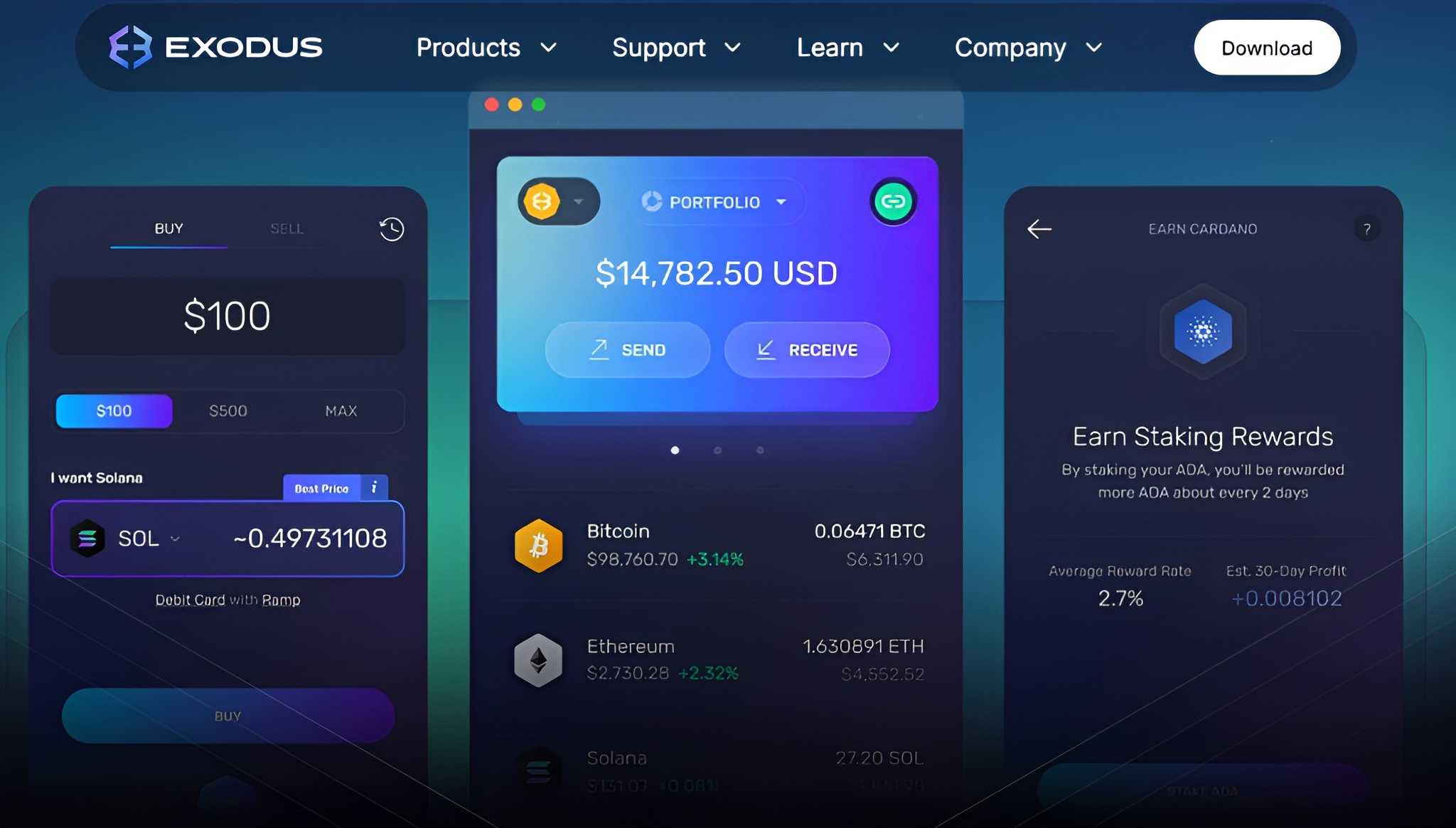
Choose a suitable cryptocurrency wallet based on your preferences. Trust Wallet and Exodus are popular online wallets, while Trezor and Ledger are well-known offline wallets.
- Hot/Software wallets: Download your desired wallet’s browser plugin or mobile application from its official website, App Store, or Google Play.
- Cold/Hardware wallets: Plug or connect your hardware wallet to your desktop, laptop, or smartphone to access the wallet software. It guides you on how to activate your wallet.
Step 2: Select “Recover” or “Import” Option
Click the “Recover”, “Import”, or “Restore” button on your online wallet app or your offline wallet’s companion software.
Step 3: Enter Your Seed Phrase
To restore a software wallet, enter the secret recovery phrase in its desktop/mobile application. To retrieve a hardware wallet, input the phrase using the device interface. Hardware wallets come with physical buttons for typing letters and numbers. Ensure you enter the seed phrase in the correct order without making any mistakes.
Step 4: Set a New Password
Once you enter the secret phrase, the application/device prompts you to create a new PIN or password. Store your new passcode safely, as you need it to secure access to your wallet.
Step 5: Synchronize with the Blockchain
After you set a new password/PIN, the wallet starts synchronizing and retrieving your data from the blockchain. It also updates your transaction history and asset balances. To sync a hardware wallet, connect it to your computer and open the accompanying software to make the updates. Once the wallet is fully synchronized, it displays the latest state of the blockchain, including your revised transaction records and crypto holdings.
Common Mistakes in Seed Phrase Storage
- Storing your seed phrases online: Never capture screenshots or save your recovery phrases on the cloud or an online device. If the server/device is hacked, your seed phrase will be compromised, resulting in a permanent loss of your cryptocurrencies.
- Transacting on devices connected to a public Wi-Fi: If you transact using hot wallets on devices connected to a shared network, you’ll expose your seed phrase to online threats.
- Writing down the phrase on paper: Since paper is fragile and easily destroyed by fire, water, and natural disasters, it isn’t ideal for storing seed phrases.
- Preserving the phrase in unsafe places: Store your recovery phrase in a secret location that only you can access. If you don’t have a secure location, consider paid services like Ledger Recover. It splits your secret phrase into multiple parts and distributes them among trusted custodians.
- Sharing your backup phrase with others: Ensure you don’t share your seed phrases with anybody, including family and friends. Beware of scammers and phishing sites that adopt social engineering tactics to manipulate you into disclosing sensitive data.
Real-World Examples of Poor Seed Phrase Management
- Scribbling the seed phrase on a piece of paper that can be mistaken for trash and destroyed by unforeseen events.
- Storing private keys/secret phrases in easily accessible locations like your closet, wardrobe, kitchen cabinet, workdesk, etc.
- Maintaining a single copy of the seed phrase rather than keeping multiple copies in different locations.
- Recording the seed phrase incorrectly or misplacing it.
- Saving the recovery phrase in note apps that are synced across multiple devices or in text files on infected computers.
- Sharing seed phrases with fraudsters who pose as customer support agents.
Conclusion
Seed phrases play a pivotal role in the crypto world. They help users retrieve their wallets even if they lose access to their private keys or cryptocurrencies. Offline wallets or metal storage solutions are best for securely storing and protecting recovery phrases from prying eyes and hacks.
FAQs
If you lose your seed phrase, you’ll lose your crypto assets forever. If somebody gets hold of a recovery phrase, they can regenerate your wallet’s private keys and move your cryptocurrencies.
An example of a seed phrase would be “acoustic, cannon, drum, fault, express, scrub, very, yellow, range, poem, limit, jelly.”
Seed phrases remain safe as long as you store them with utmost care in a secure offline location. Improper storage/disclosure can result in the theft of your seed phrase and permanent loss of your assets.
No. The standard BIP-39 phrases contain 12 – 24 English words. Shamir backup (SLIP-39) can even produce a 33-word share.
You should never use your hardware wallet’s secret recovery phrase to set up a software wallet. By doing so, you expose your seed phrase, private keys, and cryptocurrencies to online threats.
