
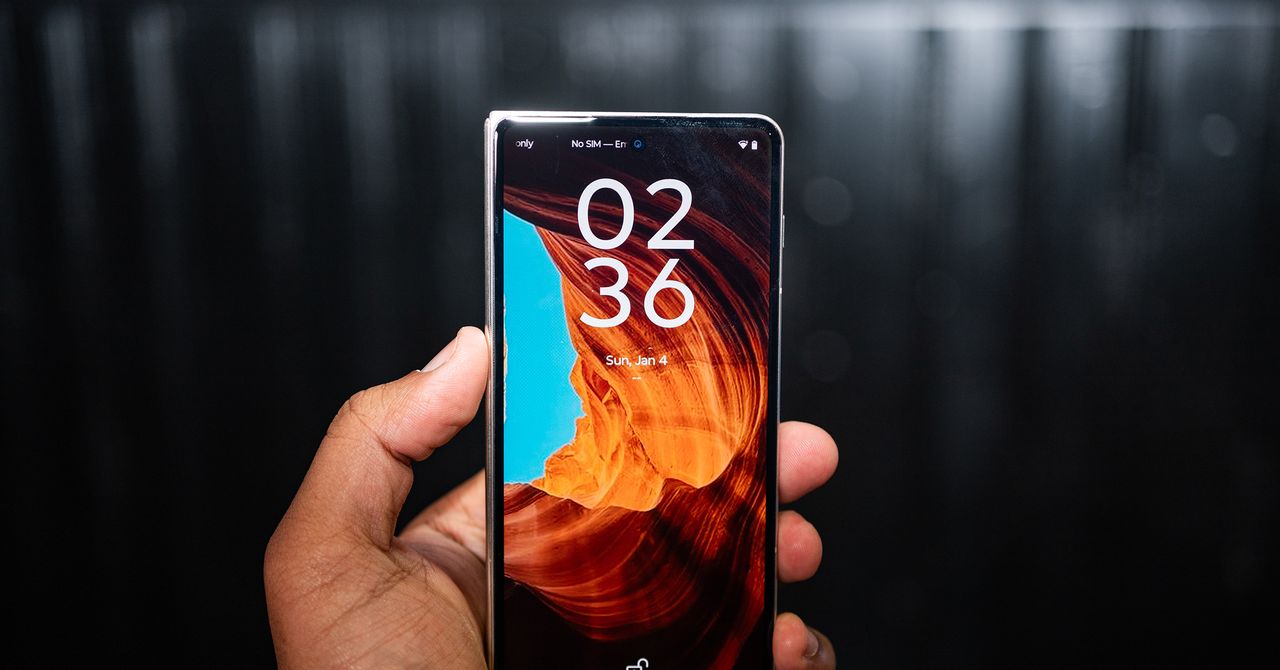
Motorola does have another actual new phone: the Signature. It’s a new line of “premium” phones, but the catch is that these devices won’t be sold in the US. For its candy-bar phones, Motorola has dipped its toes into flagship territory every so often, only to dip back out as it struggles to compete with the likes of Apple and Samsung; it’s predominantly known for its Moto G budget phones, particularly in the US.
The Signature is just 6.99 millimeters thick—it’s no iPhone Air, but that’s thinner than your usual handset—and it has a fabric-like material on the back. It’s powered by the Snapdragon 8 Gen 5 chipset, has four 50-megapixel cameras on the back, and carries a 5,200-mAh silicon-carbon battery in tow. More importantly, Motorola is finally committing to seven years of blanket software updates for this phone. It’s a shame US customers won’t be able to enjoy that.
An AI Pendant

On the artificial intelligence front, Motorola and its parent company, Lenovo, are working together on a unified AI assistant called Qira. It’s the culmination of several AI features both companies have deployed over the years, just in one platform.
It’s powered by various large language models, from Copilot and Perplexity to Google’s Gemini, along with Motorola and Lenovo’s own in-house LLMs. The idea is that instead of reaching for these various services, you can just ask Qira, no matter if you’re on a Lenovo laptop or a Motorola phone. It’ll launch first on Lenovo PCs later this year, then select Razr, Edge, and Signature devices.
Qira also powers Project Maxwell, a concept AI pendant from Motorola’s 312 Labs. If you’re tired of pulling out your smartphone to snap a pic and search for something, well, this wearable solves exactly that. It has a camera and microphone, so just tap the touch-sensitive button on the front and ask a question about whatever you’re looking at—whether you want to know what kind of tree is in front of you, or if you want to add the date of a concert into your calendar if you’re staring at a poster.
