
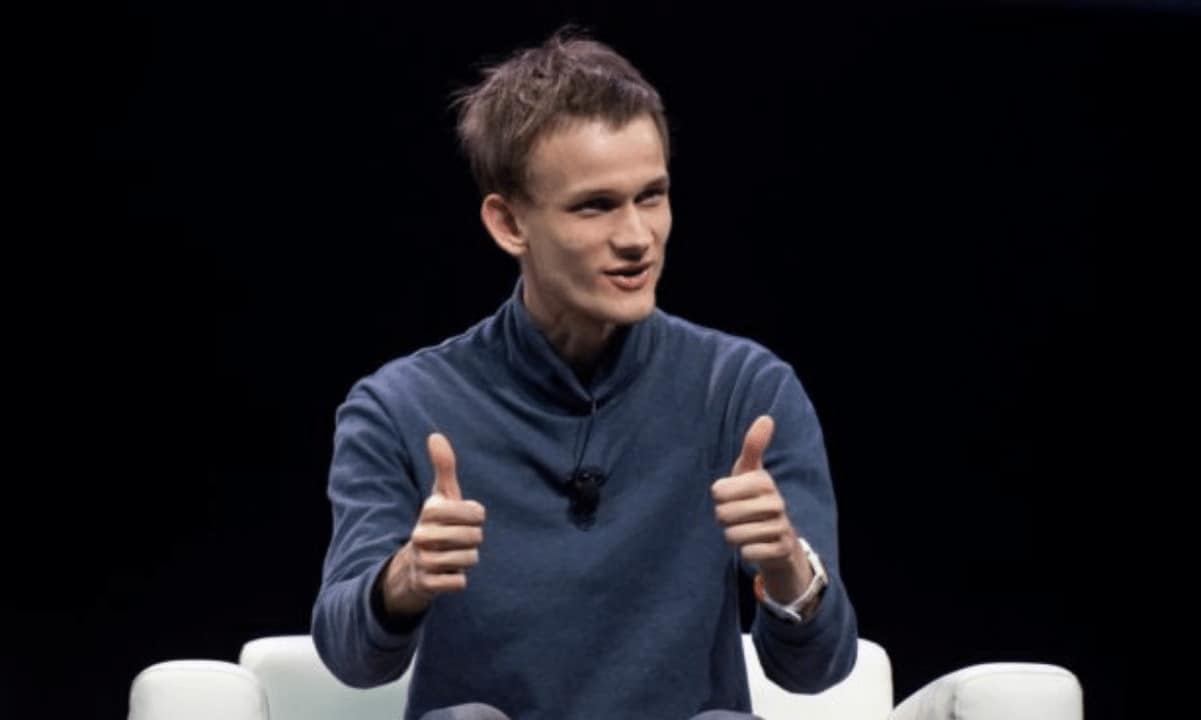
Buterin frames Ethereum’s progress as a structural shift, not a performance tweak, pointing to live code already reshaping the network.
Ethereum co-founder Vitalik Buterin over the weekend declared that the blockchain trilemma, the long-held belief that a network cannot simultaneously achieve decentralization, security, and scalability, has been solved.
His statement marks a pivotal claim for the ecosystem, asserting that this breakthrough is no longer theoretical but is being realized through live technology on the network.
Live Upgrades Shift Ethereum’s Network Design
In a detailed post shared on X on January 3, Buterin argued that the rollout of PeerDAS on Ethereum’s mainnet, combined with zero-knowledge Ethereum Virtual Machines (ZK-EVMs) reaching the alpha stage, has changed what the network can do in practice.
“The trilemma has been solved—not on paper, but with live running code,” he wrote.
Buterin also noted that data availability sampling is already active, while ZK-EVMs have reached “production-quality performance,” with safety work still ongoing.
He compared Ethereum’s current structure with earlier peer-to-peer systems such as BitTorrent, which he said offered high bandwidth but lacked consensus, and Bitcoin, which he claimed had achieved strong consensus and decentralization at the cost of throughput.
According to the developer, with PeerDAS and ZK-EVMs, Ethereum now combines all three, allowing high bandwidth without central control. He described the shift as “not minor improvements” but a move toward “a fundamentally new and more powerful kind of decentralized network.”
Buterin’s post also outlined a multi-year roadmap. He expects larger gas limit increases in 2026, early opportunities to run ZK-EVM nodes, and further adjustments through 2030 as ZK-EVMs become a primary way to validate blocks. He added that distributed block building is still a longer-term goal to reduce central points of control in transaction ordering.
You may also like:
Community reaction reflected both excitement and debate. CryptoSensei wrote that these changes “aren’t incremental tweaks” and stressed that PeerDAS being live makes the claims harder to dismiss as theory.
However, others, like Solana developer Mert Mumtaz, dismissed the blockchain trilemma as an outdated concept.
“It is not a real thing. the trilemma does not actually exist today,” he said on X.
Why Decentralization Still Matters
The Ethereum architect’s comments follow earlier warnings about centralization risks. In his New Year’s message, he said the blockchain’s future depends not just on upgrades but on keeping decentralization and usability intact as it grows.
That concern gained traction in 2025, a year marked by major upgrades such as Pectra and Fusaka, but also by criticism that Ethereum increasingly relied on layer-2 networks and large staking operators.
Market performance added to the tension, with the price of the network’s native ETH token lagging in 2025 despite higher usage, institutional interest, and record development activity, fueling doubts about whether technical progress alone can translate into investor confidence.
Analysts say Buterin’s latest message reframes the discussion. Rather than arguing about short-term price moves, it places focus on whether Ethereum can support large-scale applications without censorship, downtime, or excessive costs. As Daniel Tschinkel pointed out in a recent social post, users ultimately trust systems that work consistently and predictably.
SECRET PARTNERSHIP BONUS for CryptoPotato readers: Use this link to register and unlock $1,500 in exclusive BingX Exchange rewards (limited time offer).
