
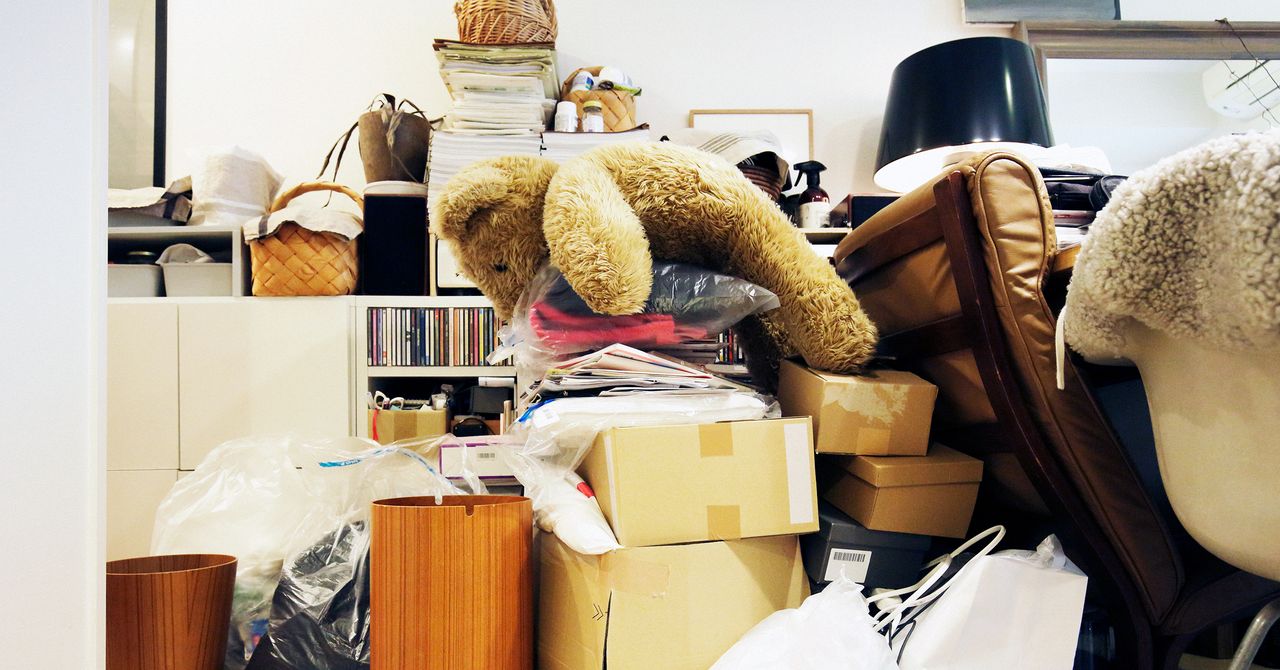
Spring cleaning feels like an impossible chore. Where do you start? How do you even know when you’re done? Rather than feeling mentally blocked, make the process more manageable with these tips.
Start by defining “spring cleaning.” It is in fact two separate tasks: decluttering and deep cleaning. Don’t try to do both at once. This article focuses mostly on decluttering, with a few deep-cleaning tips at the end.
Think of each room as an individual space. Treat every closet and storage area as a separate space as well. If you have a large room, like a big garage, you can further divide it into front and back, left and right—whatever makes sense. The idea here is to make “spring clean my home” a smaller and more specific task, such as “declutter the back half of my basement.”
Pick one space to declutter or deep clean. You can add more spaces to your to-do list later, but decide where you will start. If you want to declutter and deep clean, declutter first.
Be sure to read our other guides on organizing your cables, cleaning your computer, your TV screen, your earbuds, and even your vinyl records. We have more advice on tidying up all your tech in our Spring Scrub series. If you’re doing some deep cleaning, check out our guide to eco-friendly cleaning products.
Strategies for Decluttering
Decluttering means getting rid of things you don’t need or want. It’s different from organizing and tidying up, and it’s normal to struggle with it. But there’s no right and wrong way to spring clean, so you might decide to simply organize for now and declutter later. That’s fine! Try some of these strategies to make it easier.
KonMari method. Marie Kondo’s famous approach is not bad. (If you hadn’t heard, after the arrival of her third child, Marie Kondo gave up being tidy all the time, which I absolutely applaud.) Pull out everything from one space, be it a closet or a dresser. Empty it completely. Hold up each item, ask whether it “sparks joy,” and put it into one of two piles: “keep” or “not keep.” If that’s too hard, create a third pile—”I’m not sure”—so you can reconsider items without feeling pressure to chuck ’em.
Box up your “I’m not sure” pile. If you can’t bear to get rid of anything in your “I’m not sure” pile, put it all in a box and label it with today’s date. Then tuck it somewhere out of sight. See if you need anything in that box between now and next year’s spring cleaning. If not, it’s time to get rid of those things.
Turn your hangers the wrong way. A similar trick for deciding which clothes to eliminate is to hook all your hangers backward. When you wear a piece of clothing, switch the hanger the right way around. After six months or a year, you can see which clothes you have not been wearing, and that may give you more reason to let them go. That said, if you’re trying to spring clean today, this method isn’t ideal. But it’s a start for next year.
Label heirlooms. In the second half of life, you have to decide what will happen to your most important possessions after you die. Who will inherit them? Do these people know? As part of your decluttering process, sticker items with people’s names or write down the details in a document that you share with a trusted person. This is in effect one part of Swedish death cleaning, which is an ongoing process, unlike spring cleaning, which is usually time-limited. Either way, when you’re taking a hard look at all your possessions, it’s worthwhile to ask yourself, “Why am I keeping this? And who will have to deal with it after I’m gone?”
How to Get Rid of Your Unwanted Stuff
Sorting unwanted items is one step. Next, you have to get rid of them.
Sell it. The advantage of selling is you earn cash. The disadvantage is it’s a lot of work. You’ll get the most cash if you sell directly to buyers. NextDoor, eBay, Craigslist, Facebook Marketplace, and OfferUp are popular options for all kinds of stuff. For electronics, Swappa and Gazelle are reliable.
