
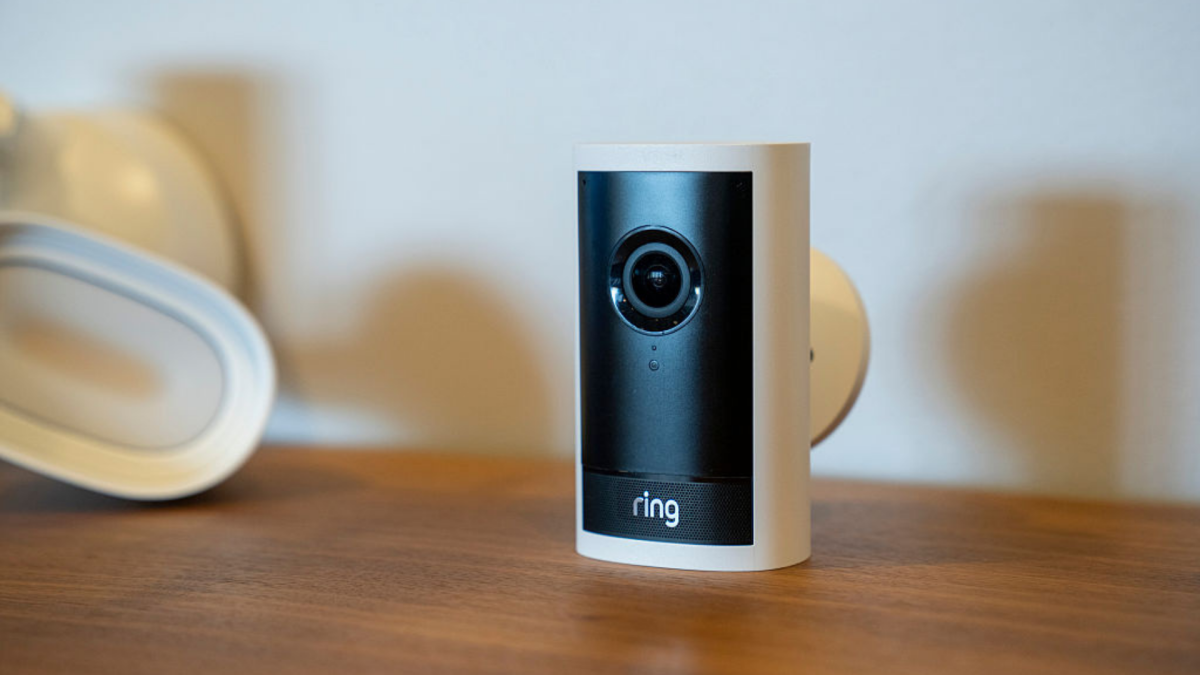
Ring and surveillance company Flock Safety have cancelled their partnership, which planned to make it easier for police to access footage from users’ personal cameras. This comes less than a week after Ring’s widely criticised Super Bowl ad drew further attention to the concerning privacy implications of its home security system.
“Following a comprehensive review, we determined the planned Flock Safety integration would require significantly more time and resources than anticipated,” Ring wrote in a blog post on Thursday. “As a result, we have made the joint decision to cancel the planned integration. The integration never launched, so no Ring customer videos were ever sent to Flock Safety.”
Though Ring states that resource issues are to blame for the partnership’s cancellation, its collaboration with Flock Safety has been the subject of significant criticism regarding privacy and surveillance concerns. Distrust toward the Amazon-owned surveillance camera company has escalated, with users reportedly disconnecting, destroying, or returning their Ring devices. Some have also specifically cited Flock Safety’s use by Immigration and Customs Enforcement (ICE).
News of the partnership’s cancellation closely follows Ring’s poorly received Super Bowl ad, which promoted its AI-powered Search Party feature. Advertised as a tool for finding lost pets, Search Party allows people to upload a photo of their dog so that Ring can search their neighbours’ camera footage for the animal using AI detection.
Concerned viewers quickly pointed out that this technology could very easily be used to track humans as well. Ring introduced facial recognition to its devices late last year, the Electronic Frontier Foundation stating that the feature could potentially violate people’s right to privacy.
Mashable Light Speed
Why Ring and Flock Safety’s partnership raised privacy concerns
Announced last October, Ring and Flock Safety’s partnership was promoted as a tool for users to “help solve crime in [their] community.” Police would be able to request Ring camera video directly from users, which Flock Safety would send straight to them once approved. Flock Safety has stated that it is partnered with over 5,000 law enforcement agencies.
“When local public safety officers are investigating an active case, local officers using Flock Safety’s technology can now post a request directly in the Ring Neighbors app asking for help,” Flock wrote in a blog post at the time. “If you decide to share, Flock’s system securely delivers your video directly to the public safety agency handling the case.”
The planned partnership was met by backlash when initially unveiled, with critics noting that the Flock Safety’s services and data have been used by agencies such as the U.S. Customs Border Protection (CBP) and ICE. 404 Media reported last May that while Flock was not in direct contact with ICE, the agency still accessed its services and data via requests from local law enforcement.
Flock has since confirmed this, stating that though it does not have a direct partnership with ICE, the agency can still access it through a “local customer.” The company has also admitted to working directly with CBP.
Further, Ring has had a historically close relationship with law enforcement as well. A 2019 report from Motherboard revealed that Ring had secret deals with dozens of U.S. police departments, providing free products and a private portal for requesting footage without a warrant. In exchange, law enforcement officers agreed to promote Ring to their local community.
As of 2020, 2,014 government agencies were able to access Ring’s camera surveillance network via its Neighbors Portal program. Agencies submitted Ring footage requests for over 22,335 incidents that year, over half of which were approved. Then in 2022, Amazon admitted that it had sent Ring camera footage to the police without users’ knowledge or consent.
Ring did axe its Request for Assistance feature in 2024, which had allowed police to request camera footage from users and kept a public record of it (though private requests could still be made). However, it returned to its focus on providing law enforcement with users’ videos last year, allowing police to request footage via taser-maker Axon’s evidence management system.
